
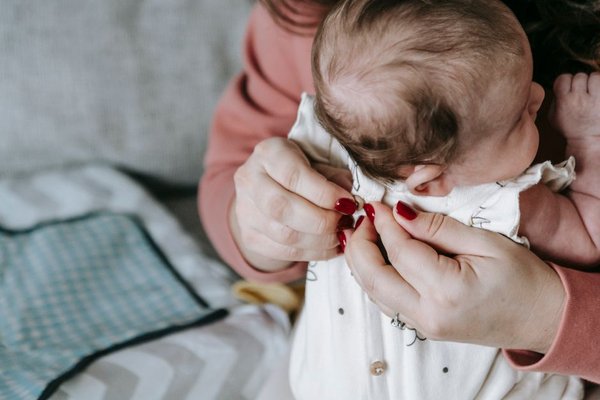
Newborn skin can look surprisingly dry, flaky or papery during the first days after birth. For many parents, the peeling is most noticeable around the hands, feet, ankles or wrists. In most cases, newborn skin peeling is a normal part of the skin adjusting from life in the womb to the outside world. It usually settles on its own with gentle care and time.
Why does newborn skin peel?
A baby’s outer skin layer is very thin at birth and continues maturing during the first weeks of life. Before birth, the skin is protected by amniotic fluid and vernix, the creamy white coating seen on some newborns. After delivery, the skin begins adapting to air, clothing, washing and changes in temperature. As that happens, outer skin cells may shed, creating patches of peeling or flaking.
Peeling can be more obvious in babies born after their due date. By then, more of the protective vernix may have been absorbed before birth, so the skin can look drier or more cracked at first. Babies born early may have a different skin appearance, and their skin barrier can take longer to mature.
This kind of peeling skin in a newborn is not usually a sign that the baby has been washed incorrectly or needs lots of moisturiser. It is often simply part of normal development.
What normal peeling can look like
Normal peeling is usually superficial. You may see fine flakes, thin pieces of skin lifting at the edges, or dry-looking patches that gradually come away. The skin underneath should generally look healthy rather than raw or weeping.
Common areas include the hands, feet, ankles, wrists and sometimes the tummy or skin folds. One foot may peel more than the other, or the peeling may appear in small patches rather than evenly across the body. That uneven appearance can still be normal.
Look at your baby as a whole rather than focusing only on the flakes. A comfortable baby who is feeding normally and has skin without increasing redness, swelling or discharge is different from a baby who seems unwell or has rapidly worsening skin changes.
Gentle care during the first weeks
For uncomplicated newborn skin peeling, less is often more. NHS guidance advises using plain water for bathing during the first month because a newborn’s skin barrier is still developing. There is usually no need to scrub away flakes or use fragranced washes, bubble bath or adult skincare products.
Keep baths simple
You do not need to bathe a newborn every day. When you do, use comfortably warm water and keep the room warm. Wash gently and pat the skin dry, especially in creases. Avoid rubbing with a towel, because friction can make loose skin look more irritated. A newborn bathing guide is a useful related topic for building a simple routine.
Do not pick or pull peeling skin
It can be tempting to remove a visible flap of skin from a tiny heel or toe. Leave it alone instead. Pulling at peeling skin can lift skin that is not ready to shed and may cause soreness.
For example, if your baby’s ankles look flaky during a nappy change, gently clean only what needs cleaning, pat the area dry and dress the baby as normal. You do not need to rub the ankles until they look smooth. The loose skin will often shed by itself over the following days.
Be cautious with moisturisers and oils
Parents often assume that peeling means a newborn needs lotion straight away, but routine moisturising is not always necessary in the first month. NHS newborn skincare advice generally favours plain water and avoiding lotions or oils while the skin barrier matures. This also reduces exposure to fragrances and other ingredients that may irritate sensitive skin.
If the skin remains very dry, cracked or uncomfortable, ask your midwife, health visitor, pharmacist or GP what is suitable for your baby’s age and skin. When an emollient is recommended, a simple fragrance-free product is generally preferred over scented cosmetic lotions. Nappy rash care is another useful related topic when irritation is limited to the nappy area.
What to avoid on peeling newborn skin
Newborn skincare does not need a long product list. Avoid exfoliating, scrubbing or using adult dry-skin treatments. Essential oils, perfumed creams and strong soaps can also irritate delicate skin. Talcum powder is unnecessary, and medicated creams should not be used unless a healthcare professional has advised them for a specific reason.
Do not assume every dry patch is eczema. Peeling during the baby skin first weeks can be normal, while eczema and other skin conditions may have different patterns and need different care. If you are unsure, a health visitor or GP can assess the skin directly.
When should you ask for medical advice?
Simple peeling should gradually improve rather than becoming more inflamed. Speak to your midwife, health visitor, pharmacist or GP if the skin is persistently cracked, bleeding, very sore, spreading in an unusual way or not improving as expected. Also seek advice for increasing redness, warmth, swelling, discharge, blisters or crusting.
If your newborn has a fever, is unusually sleepy, is feeding poorly, has breathing difficulty or seems generally unwell, seek urgent medical advice rather than assuming the problem is only dry skin. A rash that does not fade when pressed also needs urgent assessment. Caring for your baby’s umbilical cord is another natural companion topic because both involve keeping delicate areas clean without unnecessary products.
FAQ about newborn skin peeling
How long does newborn skin peeling last?
It often improves during the first few weeks as the outer skin layer sheds and the skin barrier matures. The timing varies between babies. If peeling is severe, persistent or accompanied by inflammation, ask a healthcare professional to check it.
Is peeling worse in overdue babies?
It can be. Babies born after their due date may have less vernix remaining on the skin, so their skin can look drier, cracked or more noticeably flaky after birth.
Should I put moisturiser on my newborn’s peeling skin?
Not automatically. UK guidance generally recommends simple skincare with plain water during the first month and avoiding routine lotions or oils. If your baby’s skin is persistently dry or cracked, ask a midwife, health visitor, pharmacist or GP whether a suitable fragrance-free emollient is needed.
Can I peel off loose skin from my baby’s feet or hands?
No. Let loose skin shed naturally. Picking or pulling can make the area sore and may damage the newer skin underneath.
A calm approach is usually enough
Newborn skin peeling can look dramatic, but it is commonly a normal early change. Gentle washing, minimal products and patience are usually all that is needed. Watch for signs of irritation rather than trying to make every flaky patch disappear. As your baby’s skin barrier develops through the first weeks, the peeling should gradually give way to smoother skin.